How NDIS Speech Pathology Supports Communication, Independence, and Everyday Living
Communication is one of the most important skills people use every day. It helps individuals express their needs, build relationships, participate in education and employment, and engage confidently within their communities. For many people living with disability, communication challenges can create barriers that affect independence, social participation, and overall quality of life.
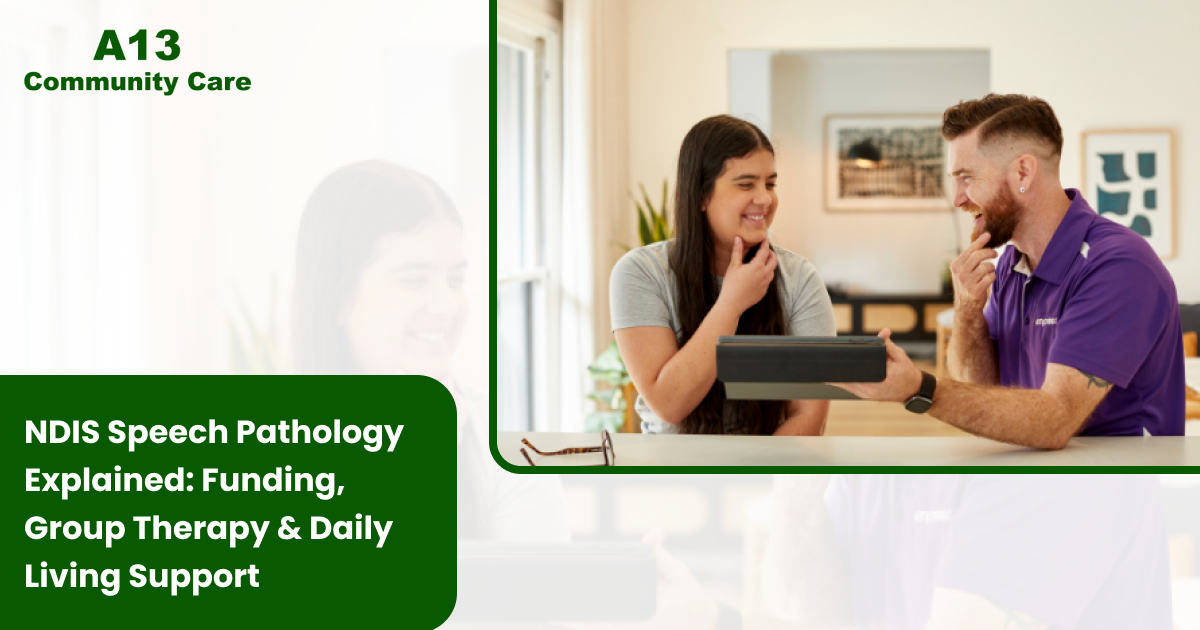
This is where NDIS Speech Pathology plays a valuable role. Speech pathology services support individuals who experience difficulties with communication, language, social interaction, speech clarity, and other related challenges. Through personalized therapy programs, participants can develop practical skills that improve their ability to communicate effectively in everyday situations.
Under the NDIS, eligible participants may receive funding for speech pathology services when these supports are linked to their goals and functional needs. These services may be delivered through individual sessions, Group Therapy programs, or as part of a broader allied health support plan that includes Occupational Therapy NDIS services and assistance from an NDIS Support Coordinator.
This guide explains how speech pathology funding works, how therapy supports daily living, the benefits of group-based programs, and how A13 Community Care helps participants access services that improve communication and independence.
Understanding the Role of NDIS Speech Pathology in Participant Development
Communication challenges affect every individual differently. Some participants may require support to improve speech clarity, while others may need assistance with language comprehension, social interaction, or alternative communication methods.
What NDIS Speech Pathology Services Help Participants Achieve
Speech Pathology NDIS services are designed to help participants strengthen communication abilities that support daily living and personal development.
These services may assist participants in:
Improving speech clarity
Developing language skills
Understanding information more effectively
Building social communication abilities
Enhancing confidence in conversations
Increasing participation in community activities
The primary goal is to help participants communicate more effectively and engage more independently in everyday life.
Communication Challenges That NDIS Speech Pathology Can Address
Speech pathologists work with participants who experience a wide range of communication difficulties.
These may include:
Difficulty expressing thoughts and ideas
Challenges understanding spoken language
Social communication barriers
Limited conversational skills
Alternative communication requirements
Swallowing and feeding concerns
Every therapy plan is tailored to the participant's individual goals and support needs.
Why Early Access to Speech Supports Improves Long-Term Outcomes
Early intervention can help participants develop effective communication strategies before challenges become more significant.
Benefits of early support may include:
Improved confidence
Better educational participation
Stronger social relationships
Enhanced independence
Greater community involvement
Consistent support often leads to stronger long-term outcomes.
Funding Options Available Through NDIS Speech Pathology Services
Understanding how funding works can help participants access appropriate therapy services while maximizing the value of their NDIS supports.
How NDIS Funding Can Be Used for Speech Therapy Supports
NDIS funding may support speech pathology services when they are considered reasonable and necessary and relate to participant goals.
Funding may cover:
Initial assessments
Individual therapy sessions
Communication programs
Progress reviews
Therapy resources
Group-based interventions
Funding availability depends on individual plans and approved support categories.
Understanding Eligibility Requirements for Speech Pathology Services
Eligibility for speech pathology support is generally based on how communication challenges affect a participant's ability to function in daily life.
Factors considered may include:
Functional communication needs
Professional recommendations
Participant goals
Impact on independence and participation
Providing detailed evidence during planning and review meetings can help support funding requests.
How All Disability Plan Management Helps Track Therapy Funding
Managing therapy budgets can sometimes be challenging, particularly when participants access multiple services.
All Disability Plan Management services may assist by:
Monitoring available funding
Processing invoices
Tracking therapy expenses
Providing budget reports
Supporting financial oversight
This allows participants to focus on achieving outcomes rather than managing administrative responsibilities.
Maximising Your NDIS Speech Pathology Budget Through Effective Planning
Participants can maximize therapy funding by:
Booking sessions consistently
Monitoring budget utilization
Reviewing therapy goals regularly
Tracking progress toward outcomes
Planning ahead for future support needs
Effective planning helps ensure funding remains available throughout the plan period.
Benefits of NDIS Speech Pathology for Daily Living and Independence
Communication skills influence many aspects of everyday life, from personal relationships to community participation and employment opportunities.
Benefits of NDIS Speech Pathology for Everyday Activities
Improved communication can make daily tasks easier and more manageable.
Participants may experience benefits when:
Attending appointments
Shopping independently
Following instructions
Requesting assistance
Managing personal responsibilities
These improvements contribute to greater independence and confidence.
Improving Social Participation Through Better Communication
Strong communication skills support meaningful social interactions.
Participants may benefit from:
Increased confidence in conversations
Improved relationship building
Greater involvement in community activities
Reduced social isolation
Social participation is an important contributor to overall wellbeing.
Supporting Greater Confidence in Home, Work, and Community Settings
As communication skills improve, participants often feel more comfortable expressing themselves in different environments.
This may lead to:
Better family interactions
Improved educational participation
Enhanced workplace communication
Stronger community engagement
Confidence often grows when individuals feel understood and capable of expressing their needs effectively.
How Group Therapy Supports Communication Growth
While individual therapy is important, group-based programs provide additional opportunities to practice communication skills in social environments.
How NDIS Speech Pathology Works Alongside Group Therapy
Group Therapy allows participants to apply communication strategies in real-life social situations.
Benefits include:
Peer interaction
Social confidence building
Communication practice
Shared learning experiences
Relationship development
Group settings often provide valuable opportunities to reinforce therapy goals.
Developing Social Interaction Skills Through Group-Based Activities
Group programs help participants practice important social skills such as:
Starting conversations
Maintaining discussions
Understanding social cues
Listening actively
Working collaboratively
These abilities support successful participation in community life.
Combining Individual and Group Therapy for Better Outcomes
Many participants benefit from combining personalized therapy with group-based activities.
This approach provides:
Individualized support
Practical communication opportunities
Ongoing skill reinforcement
Greater confidence development
Combining different therapy formats often leads to stronger long-term outcomes.
The Connection Between Speech Therapy and Other Allied Health Supports
Speech pathology often works most effectively when integrated with other allied health services.
How Occupational Therapy NDIS Services Complement Communication Goals
Occupational Therapy NDIS services focus on helping participants develop practical skills for everyday living.
Speech pathology and occupational therapy may work together to support:
Daily routines
Functional independence
Community participation
Personal development goals
Collaboration between therapists often improves overall outcomes.
Working With an NDIS Support Coordinator to Access Services
An NDIS Support Coordinator can help participants navigate available supports and connect with appropriate providers.
Support coordinators may assist with:
Understanding funding options
Coordinating services
Connecting with providers
Monitoring progress toward goals
This guidance can make the therapy journey more manageable.
Creating a Collaborative Therapy Approach for Better Results
A collaborative approach encourages communication between therapists, support workers, families, and participants.
Benefits include:
Consistent goal planning
Better service coordination
Improved outcome tracking
More effective support delivery
Collaboration helps ensure services remain aligned with participant goals.
NDIS Speech Pathology Support Areas and Benefits
| Support Area | How Speech Pathology Helps |
|---|---|
| Communication Skills | Improves speaking, listening, and understanding abilities |
| Social Interaction | Builds confidence in conversations and group settings |
| Daily Living Activities | Supports communication required for everyday tasks |
| Community Participation | Encourages greater engagement in community activities |
| Education and Learning | Helps participants understand and process information |
| Employment Readiness | Develops workplace communication skills |
| Relationship Building | Supports stronger connections with family and peers |
| Independence | Improves self-advocacy and decision-making skills |
Maximising Results From Speech Pathology Services
Successful communication development often requires ongoing participation and commitment.
Establishing Realistic Communication Goals
Participants who set realistic goals often achieve better outcomes.
Goals may include:
Improving conversation skills
Increasing confidence in social settings
Enhancing workplace communication
Developing independent communication strategies
Clearly defined goals help guide therapy planning.
Encouraging Family and Support Network Involvement
Families and support workers play an important role in reinforcing communication strategies outside therapy sessions.
Support networks can assist by:
Encouraging practice opportunities
Reinforcing therapy techniques
Supporting confidence building
Creating social interaction opportunities
Consistent support often strengthens progress.
Reviewing Progress and Adjusting Therapy Plans
Communication needs may change over time.
Regular reviews help:
Identify successful strategies
Address emerging challenges
Adjust therapy approaches
Maintain alignment with participant goals
Continuous evaluation supports long-term success.
Choosing the Right Speech Pathology Provider for Your Needs
Selecting an experienced provider can significantly influence therapy outcomes.
How NDIS Speech Pathology Supports Communication Development
Effective therapy providers focus on participant-centered care and measurable outcomes.
Participants should look for:
Relevant experience
Individualized therapy plans
Strong communication skills
Goal-focused approaches
Quality services contribute to better progress.
Questions to Ask Before Starting Therapy Services
Important questions include:
What experience do you have with similar support needs?
How is progress measured?
What therapy approaches are used?
How often are goals reviewed?
These questions help participants make informed decisions.
Measuring Progress Throughout the Therapy Journey
Monitoring progress ensures therapy continues to meet participant needs.
Methods may include:
Functional assessments
Goal achievement reviews
Participant feedback
Family observations
Regular evaluation helps maximize the value of therapy services.
How A13 Community Care Supports Participants Accessing Speech Pathology Services
A13 Community Care is committed to helping participants access supports that improve communication, independence, and overall quality of life.
Participant-Centred Support and Goal Planning
Services are tailored to individual goals, ensuring support aligns with participant needs and aspirations.
Connecting Individuals With Appropriate Allied Health Services
A13 Community Care helps participants access experienced professionals who provide effective therapy and support services.
Supporting Communication, Independence, and Quality of Life
Through participant-focused support, A13 Community Care helps individuals build confidence, strengthen communication abilities, and achieve greater independence.
Conclusion
Communication is a fundamental skill that influences every aspect of life. Through NDIS Speech Pathology, participants can access professional support that improves communication abilities, strengthens independence, and enhances overall wellbeing.
Whether through individual therapy, Group Therapy, support from an NDIS Support Coordinator, or collaboration with Occupational Therapy NDIS services, participants have access to a range of supports that promote meaningful outcomes.
With guidance from trusted organizations such as A13 Community Care, participants can build stronger communication skills, increase confidence, and enjoy greater participation in everyday life.